Full Book Summary
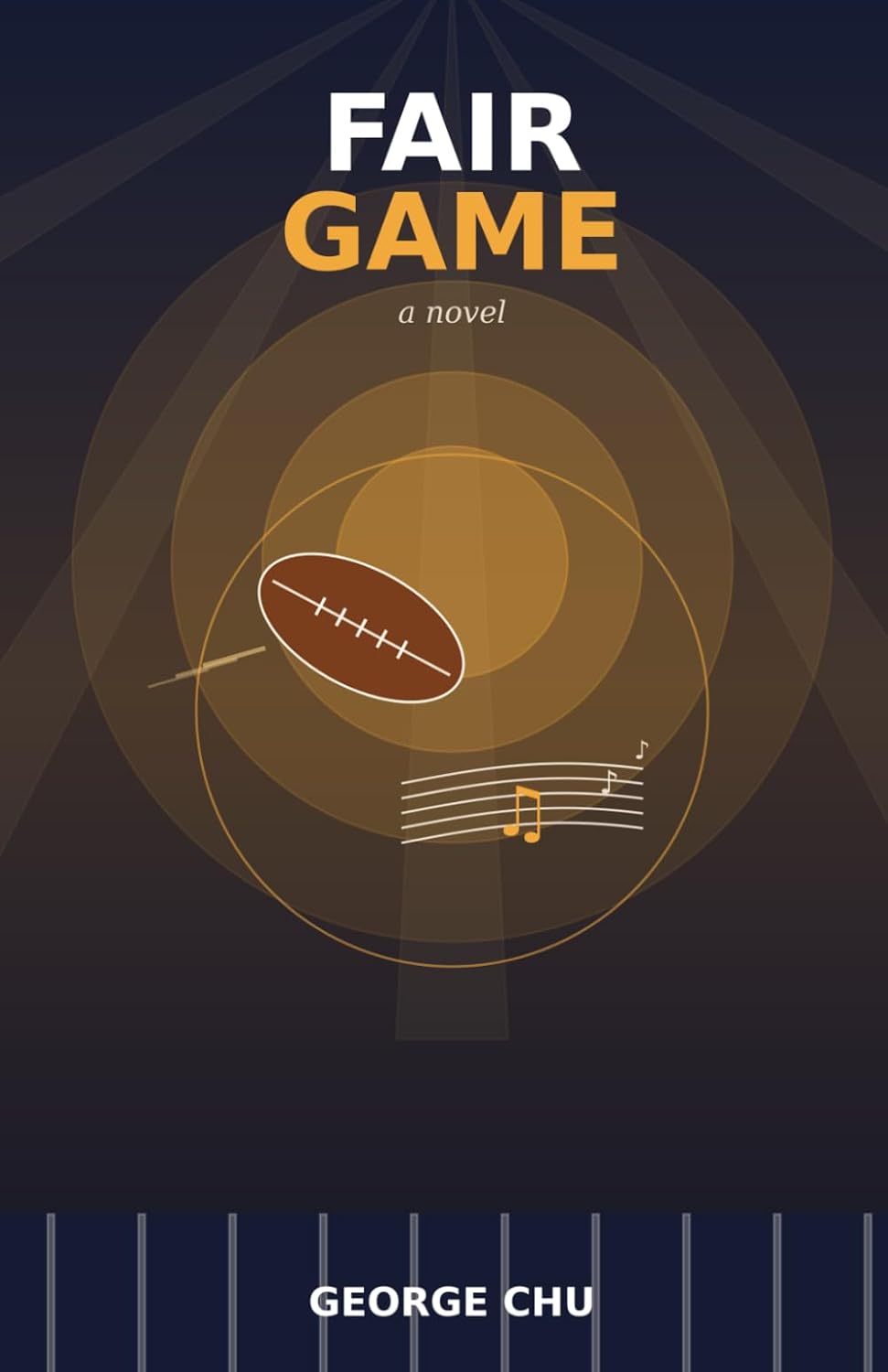
Fair Game follows one young athlete through a season in which the field and the music stand begin asking for the same hours, from the same person.
The Beginning
A novel about the two spotlights a young life can get caught between — the one over a stadium and the one waiting above a music stand. George Chu writes talent as a form of pressure: what a family expects, what a team demands, and what a person quietly wants instead. Fair Game asks what the word fair actually means once ambition, loyalty and identity are all standing on the same field.
What Drives It
A game that asks for everything. A gift that asks for something else. One player caught between both. These threads set the story in motion and rarely let it settle.
The Heart of the Book
The locker room and the rehearsal room, written with equal care. The shifts here come from character rather than contrivance.
The Conclusion
Fair Game earns its title slowly. George Chu keeps the stakes human — a scholarship, a solo, a parent’s approval — and that restraint is exactly what makes the final act land.
“Everyone calls it a fair game. Nobody agrees on what fair means.”
Key Takeaways
Two Worlds, One Voice
The locker room and the rehearsal room, written with equal care.
Quiet Turns
The shifts here come from character rather than contrivance.
Characters With Weight
Teammates, parents and rivals who all want something real.
Clean, Confident Prose
Unshowy writing that trusts the reader completely.